
ARMINAKIL BENTO
Foundry bentonite, mined and processed in Türkiye.
Since 2011 Arminakil has processed natural bentonite from two licensed mining sites in Çankırı into binder products for green sand casting — with around 100,000 tonnes of annual capacity and about 98% export-oriented business.
Product family
Four BENTO grades for different foundry needs
BENTO MAX typical values come from the supplied BENTOMAX analysis. ECO, PLUS and MIX show rounded MAX references only, not verified grade-specific results. Formulations and dosage require confirmation.
BENTO MAX
High-performance foundry bentonite
A performance-oriented bentonite for foundries that require consistent molding properties, mould strength and stable production quality.
Learn more ARMINAKILBENTO PLUS
Balanced performance and cost efficiency
A foundry bentonite that balances molding performance, production requirements and operating costs.
Learn more ARMINAKILBENTO ECO
Economical foundry bentonite
A cost-conscious bentonite for foundries looking for reliable basic binder performance.
Learn more ARMINAKILBENTO MIX
Bentonite and coal dust blend
A combined product for foundries that require bentonite and coal dust in a single prepared mixture.
Learn moreComparison
Compare the BENTO range
BENTO MAX typical values come from the supplied BENTOMAX analysis. ECO, PLUS and MIX show rounded MAX references only, not verified grade-specific results. Formulations and dosage require confirmation.
| BENTO MAX | BENTO PLUS | BENTO ECO | BENTO MIX | |
|---|---|---|---|---|
| Positioning | High-performance foundry bentonite | Balanced performance and cost efficiency | Economical foundry bentonite | Bentonite and coal dust blend |
| Application area | Automatic, high-pressure lines | General foundry production | Manual / low-pressure molding | Iron casting with coal dust |
| Performance | Highest | High | Standard | Combined binder + additive |
| Molding requirements | Demanding | Standard to demanding | Basic | Standard to demanding |
| Sand system compatibility | Green sand systems | Green sand systems | Green sand systems | Green sand systems |
| Technical specifications | BENTO MAX · document | Rounded MAX reference | Rounded MAX reference | Rounded MAX reference |
| Packaging options | 25 kg bags, Big bags, Bulk / customer-specific packaging on request | 25 kg bags, Big bags, Bulk / customer-specific packaging on request | 25 kg bags, Big bags, Bulk / customer-specific packaging on request | 25 kg bags, Big bags, Bulk / customer-specific packaging on request |
Technical specifications
Typical analysis & approximate references
BENTO MAX: typical reference values transcribed from the supplied BENTOMAX product data sheet, not guaranteed batch specifications. Units are reproduced as printed; confirm units and suitability with the laboratory before use.
ECO and PLUS figures are rounded BENTO MAX reference values only, not measurements or specifications for these grades. MIX figures refer only to the bentonite component, not the finished coal-dust blend. Grade-specific results and blend ratios require separate laboratory confirmation.
| Parameter (document unit) | BENTO MAXBENTO MAX · document | BENTO PLUSRounded MAX reference | BENTO ECORounded MAX reference | BENTO MIXRounded MAX reference |
|---|---|---|---|---|
| Moisture content (%) | 8.98 | ≈ 9 | ≈ 9 | ≈ 9 |
| Passing 75 µm (%) | 84.6 | ≈ 85 | ≈ 85 | ≈ 85 |
| FSI swelling index (ml) | 34.0 | ≈ 34 | ≈ 34 | ≈ 34 |
| MB absorption (%) | 585 | ≈ 585 | ≈ 585 | ≈ 585 |
| 600 rpm reading (7%) (Cp) | 42.0 | ≈ 42 | ≈ 42 | ≈ 42 |
| 300 rpm reading (7%) (Cp) | 36.0 | ≈ 36 | ≈ 36 | ≈ 36 |
| Green compression strength (N/cm3) | 9.80 | ≈ 9.8 | ≈ 9.8 | ≈ 9.8 |
| Wet tensile strength (N/cm3) | 0.35 | ≈ 0.35 | ≈ 0.35 | ≈ 0.35 |
| MBA (methylene blue) (Meq/gm) | 359 | ≈ 359 | ≈ 359 | ≈ 359 |
| Durability at 550 °C (%) | 69.7 | ≈ 70 | ≈ 70 | ≈ 70 |
| FL (fluid loss) (ml) | 15.8 | ≈ 16 | ≈ 16 | ≈ 16 |
| Z (brightness) (%) | 40.1 | ≈ 40 | ≈ 40 | ≈ 40 |
| S.S. (settleable solids) (%) | 15.92 | ≈ 16 | ≈ 16 | ≈ 16 |
Foundry applications
How bentonite works in the foundry
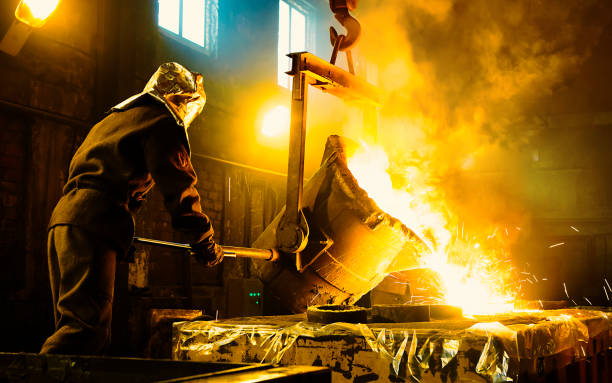
Green sand molding
Silica sand, bentonite and water are mulled into a plastic mixture that is compacted around a pattern. The mould is used without baking and the sand is recycled.
Ferrous metal casting
Grey iron, ductile iron and steel are poured at high temperatures, so bond strength and thermal resistance of the clay are critical.
Non-ferrous metal casting
Aluminium and copper alloys pour at lower temperatures; surface detail and good collapsibility become more important.
Molding sand preparation
Correct mulling time, water addition and bentonite dosing develop the bond and keep sand properties within target.
Bentonite binding properties
Hydrated montmorillonite platelets coat sand grains and bridge them, creating green strength and plasticity.
Sand system management
Each cycle burns out part of the clay. Monitoring active clay and adding fresh bentonite keeps the system stable.
Mold strength
Green compression and shear strength allow the mould to be handled and to resist metallostatic pressure.
Surface finish
A well-bonded, fine mould face reduces metal penetration, sand burn-on and scabbing.
Gas permeability
Gases and steam must escape through the sand. Excess clay or fines lowers permeability and can cause gas defects.
Thermal performance
Clay that keeps its bond after heat exposure reduces expansion defects and lowers fresh bentonite consumption.
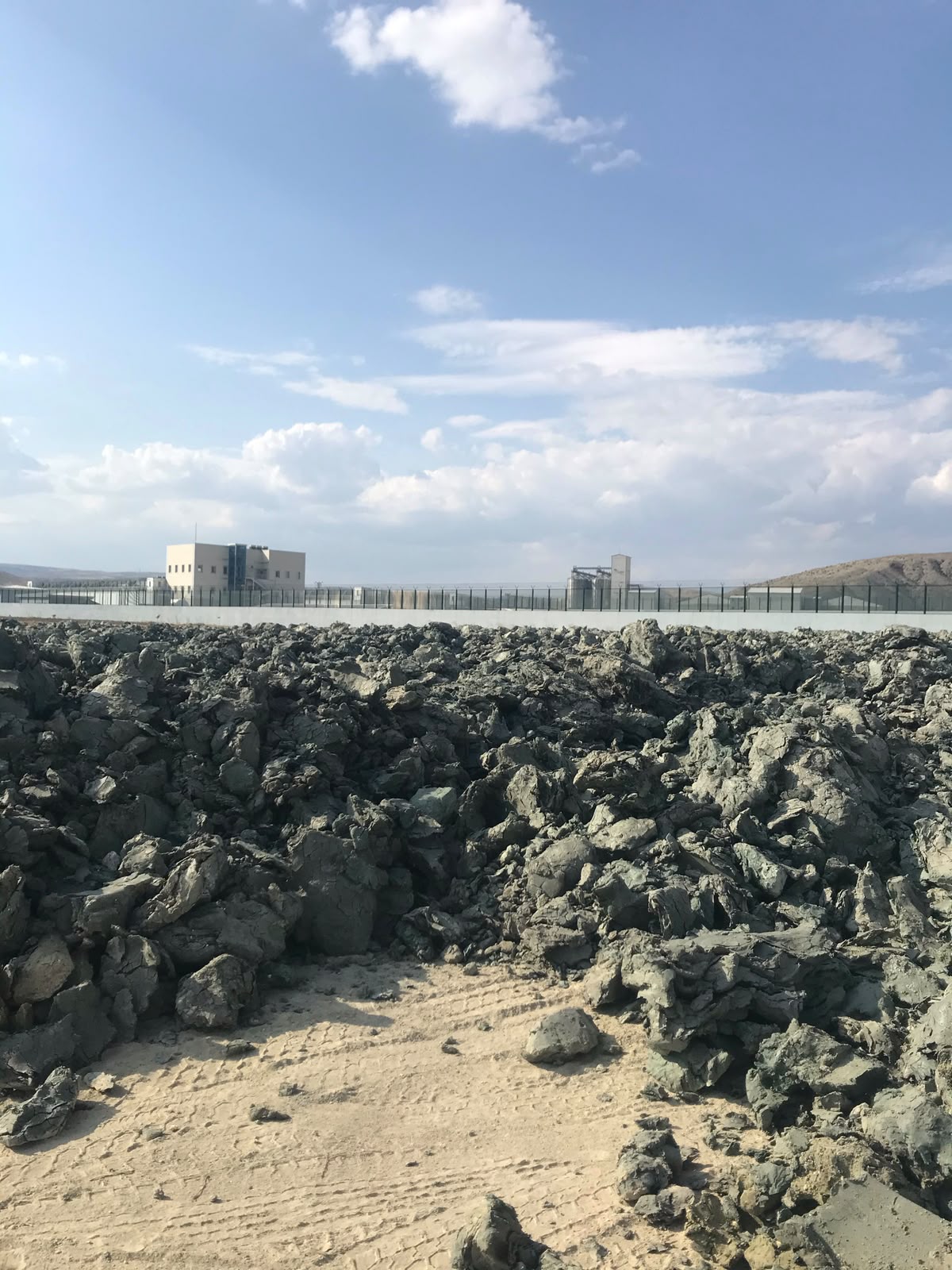
Mining & production
From our own mines to prepared foundry products
Natural bentonite from our two licensed sites in Çankırı is dried, ground, screened and classified, then prepared and packed for each industrial application.
- Two licensed bentonite mining sites — Çankırı, Türkiye
- ~100,000 t/year micronized and granular capacity
- Drying, grinding, screening and classification
- Industrial product preparation and packaging
- Export-oriented production (~98%)
Quality evaluation
Foundry bentonite test parameters explained
What each parameter measures and why it matters for molding sand. See the supplied BENTOMAX analysis and reference table above.
Moisture content
Free water in the bentonite as delivered.
Affects dosing accuracy, flow in silos and the effective clay added.
Particle size distribution
Fineness of the milled product.
Finer, uniform powder disperses faster in the muller and develops bond sooner.
Montmorillonite content
Share of the active clay mineral.
Higher content generally means more bond per kilogram added.
Swelling properties
Volume increase of the clay in water.
Indicates hydration capacity and bonding potential in the sand.
Methylene blue value
Cation exchange capacity of the clay.
A standard indicator of bentonite quality and activity.
Active clay content
Live clay in system sand, usually by methylene blue.
Guides how much fresh bentonite to add each cycle.
Green compression strength
Load a green sand specimen withstands in compression.
Determines mould handling strength and resistance to deformation.
Green shear strength
Resistance of green sand to shear forces.
Relates to pattern stripping and mould edge stability.
Compactability
Volume reduction of sand under a standard ramming.
Shows the temper of the sand and how well it fills the pattern.
Gas permeability
Ease with which air passes through compacted sand.
Too low causes gas defects; too high can roughen the surface.
Thermal stability
Bond retained after heating the clay.
Higher stability reduces clay burn-out and expansion defects.
Loss on ignition
Mass lost when the sample is heated to high temperature.
Indicates organic and volatile content, important for gas evolution.
Technical support
Support for your foundry
Scope of services to be confirmed by Arminakil.
- Product selection assistance
- Foundry application consultation
- Technical documentation
- Product performance evaluation
- Customer-specific product selection
- Application guidance
- Technical inquiry management
Logistics & packaging
Reliable supply, consistent quality
- Big bag packaging
- Industrial packaging
- Bulk supply options
- Container shipments
- International export operations
- Customer-specific packaging inquiries
Request a Quotation
Looking for a reliable bentonite supplier?
Tell us your application, volume and destination port.